“It is doctors and not judges who are the experts when it comes treatment. We do not involuntarily admit patients for amusement nor for a sense of power as some others might egregiously suggest. We do it as a last resort as the most effective and compassionate way to ease suffering…. We must resist with all our strength more legislation and regulation that will prevent us treating the ill and the vulnerable.”
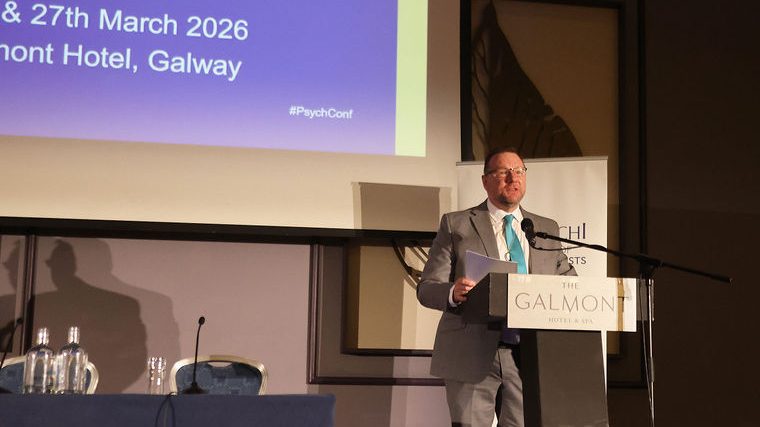
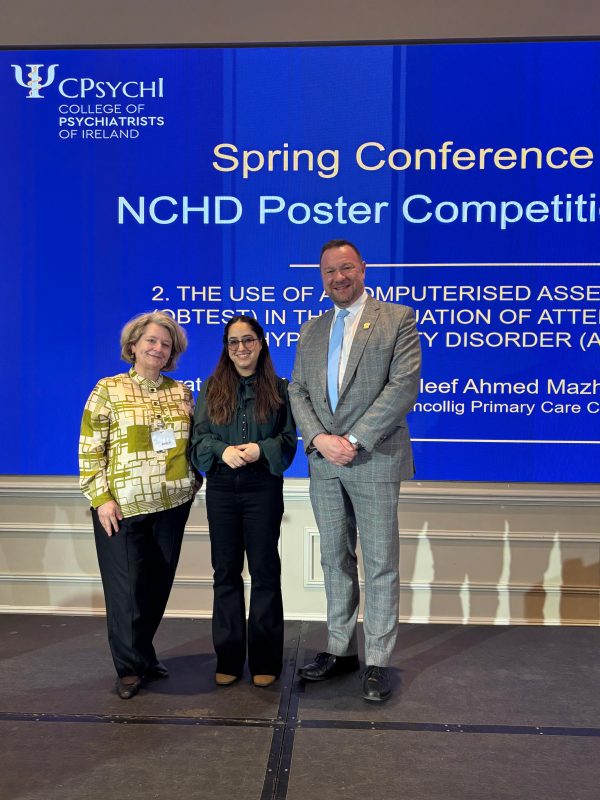
In his opening address at the Spring Conference 2025, College President Dr Lorcan Martin reiterates the threat imposed by the Mental Health Bill 2024 and other challenges including resourcing and recruitment, as well as the continued success of the College to call attention to these issues, propose solutions, and maintain training and professional competence throughout. Read the full text of the speech below, and view the full conference programme here.
Good morning, everyone, and you are all most welcome to our Spring Conference here in Johnstown Estate. It is wonderful to see so many here and I hope that you will enjoy the coming days. We have some wonderful topics coming our way and excellent speakers from at home and abroad. I would like to extend a massive thank you to the conference academic committee without whom we would not be able to maintain our standards.
How nice it would be to stand in front of you today and say that things were so much better than last year. However, I doubt even this year’s Oscar nominees for best actor could pull that one off. Our profession still looks over a landscape where challenges and obstacles meet up for an unfortunate ménage à trois with bureaucracy. No one takes up medicine for an easy life but it can be disheartening when faced with the ongoing issues of recruitment, retention, burnout and presenteeism. This is in a background of a mental health budget which we are told is the largest ever and, yet, represents less than 6% of the total health budget, possibly the smallest ever. We see ever-burgeoning management structures with titles we can’t remember while the numbers of doctors, nurses and other front-line staff remain hopelessly inadequate, working in environments that are far from conducive to staff retention. And the difficulties do not end there.
There is no doubt that the most immediate challenge is the Mental Health Bill 2024. While there are some improvements compared to the Heads of Bill, this convoluted and unhelpful document will make it almost impossible to do our jobs and, most importantly, lead to greater suffering of our patients. Yet, we are repeatedly told that it is firmly embedded in human rights. Human rights! Ah yes, the clarion call of those who wish to justify their opinion and signal their virtue. But do they ever think about the consequences of their view of human rights? They ramble on without substance, quoting documents and charters. I am sure many are well meaning, as they talk endlessly about the rights to liberty and autonomy. There is no doubt that these are important in a modern democratic society. However, where is the talk of another right, absolute in the European Convention on Human Rights? I speak of the right not to be subjected to inhuman, degrading treatment or torture. It is virtually identical to the Universal Declaration of Human Rights which also includes the word cruel. Depriving a psychotic patient of treatment or delaying that treatment so that they may continue to be tormented by hallucinations or terrified by persecutory delusions is torture. Make no mistake – this legislation, as written, is cruel and those who espouse it in its current iteration have either never known or have forgotten what it is like to see a patient profoundly distressed by symptoms that should be alleviated at the earliest opportunity and not delayed by legislation. It is doctors and not judges who are the experts when it comes treatment. We do not involuntarily admit patients for amusement nor for a sense of power as some others might egregiously suggest. We do it as a last resort as the most effective and compassionate way to ease suffering. We are already regulated to within an inch of our lives – and no one is suggesting that reasonable regulation is anything other than appropriate – but we must resist with all our strength more legislation and regulation that will prevent us treating the ill and the vulnerable.
I have heard the College criticised for not doing enough when it comes to challenges and crises. Let me tell you, nothing could be further from the truth. Our media profile is now greater than ever before and we are established as a go-to for balanced and expert opinion. Our recent criticism of aspects of the Mental Health Bill received extensive nationwide coverage – and, on a personal level, I would like to thank members for their generous messages of support – and it was quickly followed by the launch and wide coverage of the CAMHS governance document, for which I would like to congratulate all involved. In each of these cases, and in many others, we didn’t just sit on the sidelines and criticise. We offered practical, learned and evidence-based solutions. That document is only one of many which have been developed or are in development and I would like to express appreciation to all those who put so much effort into them. Aside from this, the College continues to engage with the HSE, the Department of Health and the Minister to advocate for improvement in service provision. We also advocate for more accessible services for those who may be marginalised and are currently working on a position paper on Traveller mental health in conjunction with various Traveller agencies and following on from our successful event in Kerry last year. The EAP Department continues to keep us front and centre on the airwaves, in print or on line. In additional to topical subjects, we have seen the development of new informational videos, interviews with women psychiatrists who work at senior levels in the College to mark International Women’s Day – well worth a read, by the way, as they discuss their careers and passions for psychiatry, reminding us, perhaps, of why we do what we do – and videos of Refocus members discussing the importance of prompt treatment under law have been sent to all our TDs. This is only the tip of the ice berg but it gives me an opportunity to express gratitude to the members who have given of their valuable time in these projects and to encourage as many as possible to consider contributing. I should also point out that Andrea and her team are only operating at 99.99% capacity, so they are always available to support or advise you whether you are considering writing a letter to a newspaper, making a media appearance or developing a position paper.
We cannot, of course, forget our other departments. As ever, Post-Graduate Training, under the skilled and watchful eyes of Professor Aoibhinn Lynch, Kellie Myers and their team keep a state of the art training scheme on the road with way fewer resources than needed. Dr. Ciaran Corcoran, Lorna O’Callaghan and their team in Professional Competence continue to keep us on the straight and narrow with our diaries and to provide top-class CPD events. They will also enter a new era soon and you will hear more about that tomorrow. Whether it is Jennie in Membership, Helen in the Faculties and SIGs or however many more, I could go on and on about the astonishing work that goes on in the background and that still amazes me.
Many of you will have recognised the music played as I came on stage as ‘The Stripper’. My childish humour aside, it is a reminder that we need to strip – strip back to basics and to the core of who we are and what we do. We are physicians who tend to the ill with skill and compassion, we are scientists who base our practice on a gold-standard evidence base and we are leaders in our field so that we may inspire and advocate. What we do requires years of training and personal and professional resilience. We should not and cannot allow it to be buried under rainforests worth of paper (since we still don’t have proper IT) or thwarted by countless layers of management into which all responsibility and decision-making ability dissolves. We are told that, once again, the restructuring of the health service will bring about greater efficiency and a better patient experience. Whether that happens or not remains to be seen but we must make sure our voice is heard, especially when it comes to resources and opportunities for training and research, on a par with our acute hospital colleagues.
One would think that a global pandemic which killed millions and left many more suffering would be a wake-up call to humanity but it seems we have not learned. Across our planet, division and difference not only cause strife but are actively encouraged to do so. We see people victimised and persecuted based on religion, ethnicity, gender, sexual orientation – the list goes on. It is only a year since our conference opened with Professor Dinesh Bhugra speak about the dangers of ‘othering’ and we see it daily in the world around us. Here, in the College, we have always striven to be inclusive and welcoming and we must build on those ideals to act as an example of inclusivity. We might be a small organisation but we have a big vision and a strong voice. Let us use that voice to advocate for those with serious mental illness, lest they become even further marginalised by the current trend of self-diagnosis, medicalising everything that seems different and armchair psychology from a behind a keyboard. We must also use it to demand meaningful consultation when something has an impact on how we do our jobs, not called to a ‘consultative’ meeting to be presented, fait accompli, with the latest hate crime against common sense, a prime example being the recent meeting regarding the Autism Assessment and Intervention Pathway Protocol.
I always say events like this do not magic themselves into being. I have mentioned our Conference Academic Committee and presenters but we must not forget the extraordinary work done in the background. Our conferences take many months to put together and work will already have started before this one takes place. I want to say a huge thank you to Miriam, Jennie, Karen and all the team for putting a roof over our heads, food in our mouths and coffee in our hands over the next two days, not to mention the hundreds of emails and the logistics that go into it all.
We have a fantastic programme ahead of us for the next two days and I hope you will find it interesting and enlightening. However, as we know, conferences are not all about academics. They give us a chance to catch up with friends and colleagues, swap stories professional and not so professional and to make new connections. Have a wonderful conference and remember #itsaboutpeople