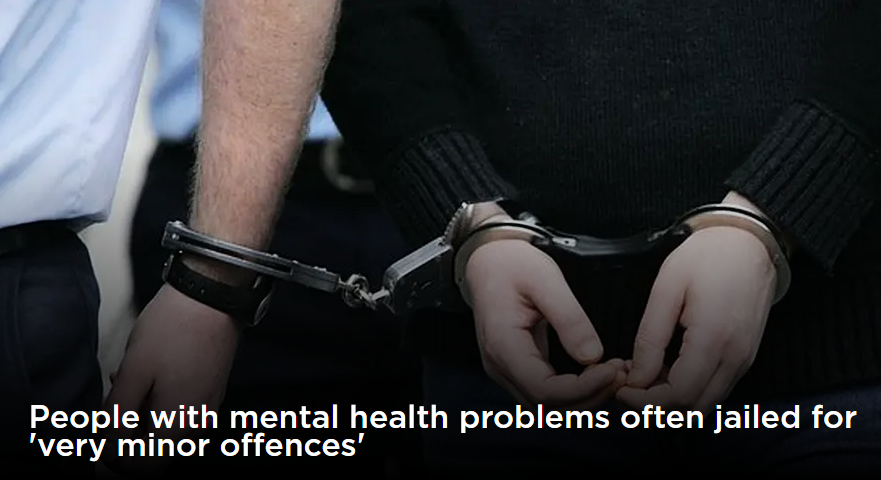
‘Like everyone who comes into contact with the criminal justice system, people with mental illness have rights and responsibilities. In reality, however, people with mental illness are more likely to be imprisoned’
‘We are all potential victims of crime and we can all develop mental illness. We must do better’
Prof Gautam Gulati and Prof Brendan Kelly co-wrote an article in the Irish Examiner on 12 February entitled ‘Prison and Mental Illness: 5 Myths and 5 Solutions’. Prof Brendan Kelly also appeared on Moncrieff’s show on Newstalk Radio on 12 February where he said prison ‘is not a therapeutic environment and people with mental illness are ending up in our prisons for very minor offences’.
Both media pieces outline how harmful an environment prison can be for a person with mental illness. They are at greater risk of violent victimisation, bullying and ill-treatment in prisons. Prison can also be a path toward homelessness or in some circumstances can lead to suicide for the mentally ill.
Some of the solutions to these challenges include:
- Better community mental health services with earlier intervention
- An emphasis on housing
- Building meaningful links between mental health and substance misuse services
- Expanding psychiatric, psychological and social work in-reach services to prisons
- More police diversion and court diversion schemes to redirect people with mental illness away from prison and towards mental health services
Read the full article from the Irish Examiner below.
Prison and mental illness: Five myths and some solutions
PRISON overcrowding is commonly in the news. The number of people imprisoned worldwide increases year on year, and so do the number of prisoners with mental illness.
Here are five common myths about mental illness in prison, and some solutions.
False. People with mental illness are more likely to be victims of crime, rather than perpetrators. Severe mental illness can be one risk factor associated with some types of offending, but this relates to a minority, and is vastly overshadowed by risks associated with substance misuse and other factors.
The over-attribution of risk to mental illness reinforces stereotypes and increases the stigma that is wrongly associated with mental illness. This also makes it harder for people with mental illness to access social supports and housing, which deepens social exclusion.
False. Deeply committed clinical staff work in prisons, but this does not ensure access to care. People with mental illness are stigmatised in prisoner hierarchies and often do not seek help for fear of perceived vulnerability.
Prisoners on medication can be bullied or subject to physical intimidation by other prisoners who seek their medication. Prisoners are also isolated from the close support of family and friends, vocational engagement, and trusting relationships — all of which can be essential for recovery from mental illness.
A prison is not a hospital. Prisons focus on security and order, which often conflict with medical priorities. Prisons are no alternative to multidisciplinary community care or hospital-based treatment for severe conditions.
False. For people with mental illness, there is little evidence that prison reduces re-offending compared to community care or hospital-based treatment. In fact, people with mental illness can remain untreated in prisons due to legislative restrictions and service limitations.
They can also be exposed to drugs and antisocial peer groups, and experience trauma. In addition, they are more likely to lose their job and home when they have a criminal history.
False. People with mental illness are at greater risk of violent victimisation, bullying, and ill-treatment in prisons. Informal hierarchies are evident in prisons in many parts of the world, where people with mental illness are forced to work for gangs or to give away food and money.
They are also more likely to experience beatings and other forms of victimisation. Prisoners are more likely to die by suicide than the general population. For people with mental illness, prison is a place of enormous risk rather than safety.
False. People who are homeless are at greater risk of being imprisoned and, once imprisoned, less able to access bail.
Also, prison is a pathway into homelessness: more people leave prison homeless than went in that way. Landlords are less likely to offer accommodation to people with a history of imprisonment. The stigma of mental illness amplifies this disadvantage.
Without an address, it is difficult to get medication, counselling, and appropriate community care. Despite the best efforts of prison staff and social workers, prison fuels a cycle of homelessness, poverty, and social exclusion.
Like everyone who comes into contact with the criminal justice system, people with mental illness have rights and responsibilities. They have rights to legal representation and fair process, and a responsibility to complete the punishment, if any, that the court determines.